· 6 min read
How to Make a DIY Beer Advent Calendar (Step by Step)
A DIY beer advent calendar, step by step: build the box, plan 24 doors that mix styles with alcohol-free days, and save a surprise for day 24.
- advent calendar
- diy
- gifts
- christmas
- beer styles
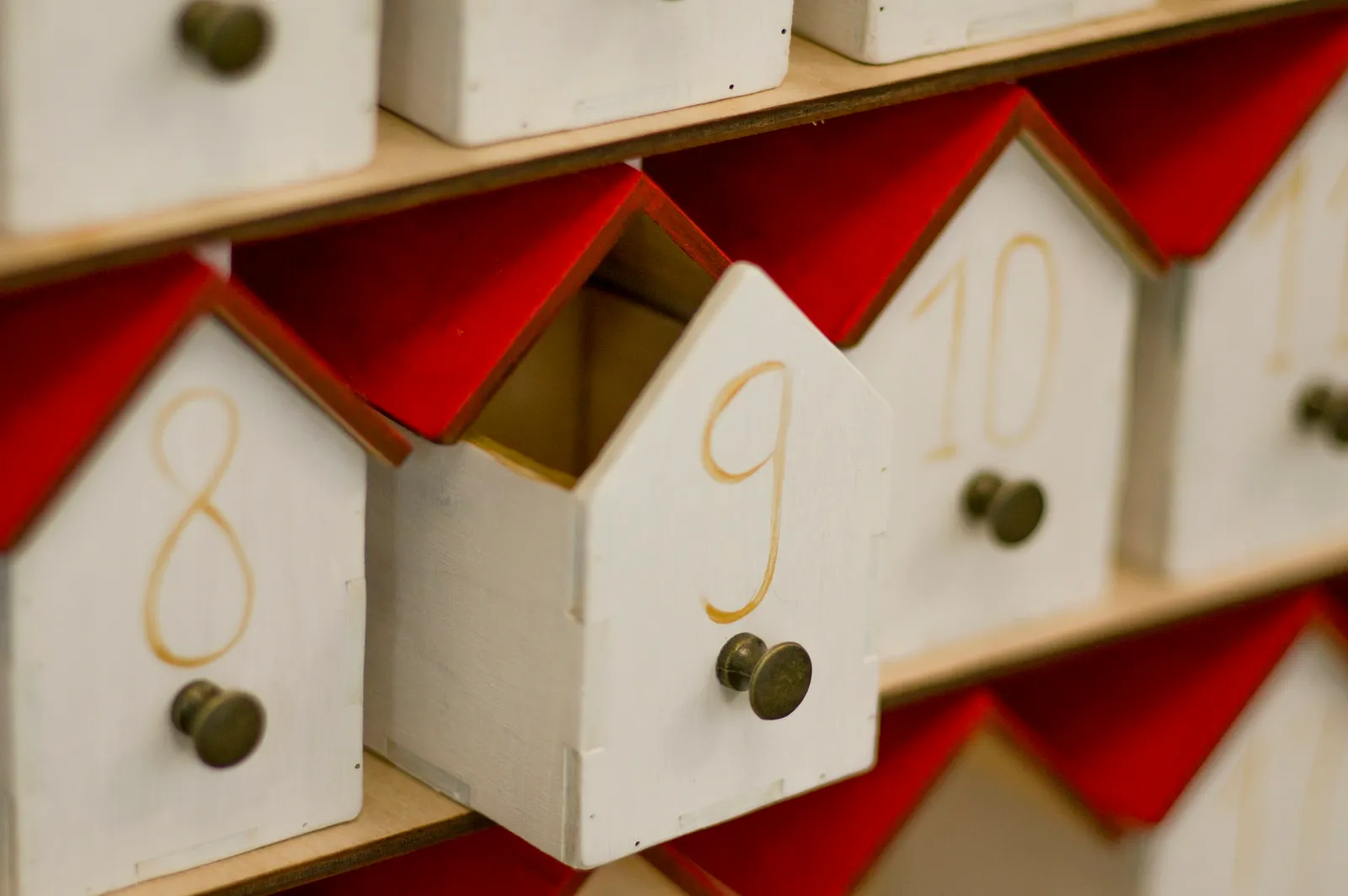
A DIY beer advent calendar is a box with 24 numbered doors, opened one per day from December 1 to Christmas Eve, where some doors hide a beer and others hide alcohol-free beers or small surprises. Making one yourself beats any store-bought version on one point: you choose every door. Below, step by step: how to build the box, how to plan 24 doors across beer styles without turning December into a marathon, and what to put behind door 24, where a cap-launching opener makes a fitting finale.
Looking for a ready-made present instead? Our gifts for beer lovers page groups the ideas by type of drinker.
What you need
- A container: a sturdy shipping box, a wooden crate or two or three cardboard drinks carriers taped together.
- Dividers: cardboard strips, reused bottle carriers or toilet roll tubes for cans.
- Wrapping or kraft paper for the front, plus tape and a craft knife.
- Numbers: stickers, a marker or printed labels from 1 to 24.
- The contents: a mix of beers, alcohol-free beers and small non-drink items (see the plan below).
Plan two evenings: one for the build, one for filling and wrapping.
Step 1: Measure before you build
Start with the tallest container you plan to use. A standard 12-ounce bottle is noticeably taller than a 12-ounce can, and a single tall bottle decides the depth of the whole box. Stand it upright next to your box and leave a little headroom so doors close flat.
Two layouts work well:
- Upright grid (4 rows of 6): the classic look, best with cans and short bottles.
- Lying flat in a crate (several layers): better for tall bottles, but keep anything you will store for weeks upright, as explained in our guide on how to store beer.
Step 2: Build the compartments
Cut cardboard strips to the inside height of the box, notch them halfway, and slot them together into a grid, the same way a wine carton is divided. Reused six-pack carriers save time: four carriers of six give you 24 slots almost instantly. Glue or tape the grid to the bottom so it does not shift when the box is carried.
Step 3: Make the doors
Cover the open front or top with a sheet of paper, then cut a three-sided flap over each compartment. Number the flaps in a scrambled order rather than 1 to 24 in a line; hunting for the day's number is half the fun. A strip of tape on each flap keeps it shut until its day.
Simpler option: wrap each item individually, number the parcels, and line them up in the box. No cutting required.
Step 4: Plan the 24 doors
This is where a homemade calendar earns its keep. Instead of 24 random beers, build a small journey through styles, from light to dark across the month, with breaks built in.
A balanced plan:
| Days | What goes behind the door | Why |
|---|---|---|
| 1 to 6 | Light styles: pilsner, helles, wheat beer, plus 1 or 2 alcohol-free beers | An easy start, and a reminder that not every door has to be strong |
| 7 to 12 | Pale ales, amber ales, a saison | More hop and malt character to compare |
| 13 to 18 | IPAs, brown ales, a sour, plus non-drink surprises | The adventurous week |
| 19 to 23 | Porters, stouts, a winter seasonal | Rich, warming styles for the run-up to Christmas |
| 24 | A gift: the opener, a glass or a favorite beer | The finale |
A few rules keep the calendar fun rather than heavy:
- Not every door needs a beer. Twelve to sixteen beers across 24 days, with alcohol-free beers and small items in between, is plenty. Door contents are an invitation, not a daily target.
- Choose small formats. Cans and short bottles take less room and make sharing easy.
- Make some doors shareable. A few beers labeled "for two" turn the calendar into something to open together.
- Add non-drink surprises. Coasters, a bag of pretzels, a bottle-cap trick written on a card, a beer-label puzzle: they make the alcohol-free days just as anticipated.
To keep the styles easy to follow, add a small card to each beer with the style and strength. Our guide on how to read a beer label explains what ABV and IBU mean, so the card can say more than "tastes good."
Step 5: Add notes and a tasting angle
A sentence per door makes the calendar feel personal: where the brewery is, why you picked that style, which glass suits it. Our beer glass types guide gives you one line per style. If the recipient enjoys comparing, suggest saving three doors from the same week for a small side-by-side tasting at the weekend, using the method in how to build a beer tasting flight at home: small pours, shared, lightest first.
Step 6: Door 24, the surprise
The last door should be a gift, not just another bottle. A natural choice is the Beer Mortar: a cannon-shaped opener that sits on a standard metal crown cap and, with one palm strike, opens the bottle and sends the cap flying upward. It is a show piece that keeps working long after December, and it suits a calendar built around opening something every day. One rule comes in the box with it: launch the cap away from people, pets, faces and anything breakable.
If the recipient prefers a quieter gadget, a pocket lever opener or a set of glasses works just as well. More ideas on our gifts for beer lovers page and in our stocking stuffers for men who love beer.
Storage and timing tips
- Fill late. Assemble the box in late November so the beers spend as little time as possible in a warm living room.
- Keep it cool and dark. Light and heat are what spoil beer fastest; a cool closet or garage beats a sunny shelf. Hoppy beers are best fresh, so give them the early and middle doors.
- Chill on the day. Tell the recipient to move the day's beer to the fridge in the morning, or use the ice bath method from our guide on how to chill beer fast.
A word on responsible gifting
A beer advent calendar is an adult gift: the legal drinking age is 21 in the US under the National Minimum Drinking Age Act, and alcohol cannot be sold to under-18s in the UK (GOV.UK). Build in alcohol-free days, and if you are not sure how much a "door" adds up to, the NIAAA's standard drink guide shows what one serving of beer represents. If the recipient does not drink, keep the same box and fill it with alcohol-free beers, snacks and bar gear: the fun is in the doors, not the alcohol.
The bottom line
A DIY beer advent calendar is a box, 24 numbered doors and a plan: light styles first, darker ones toward Christmas, alcohol-free days and small surprises in between, and a real gift behind door 24. Advent calendars have been a German Christmas tradition for well over a century (Wikipedia, Advent calendar); building your own just puts your taste behind every door. For the finale, a cap-launching Beer Mortar turns the last opening into the best one.
Cover photo: Elena Mozhvilo / Unsplash