· 11 min read
Gifts for Homebrewers (Plus: How to Cap Beer Bottles Without a Capper)
Gifts for homebrewers sorted by brew day, bottling day and sharing, plus how to cap beer bottles properly and what to do when you don't have a capper.
- gifts for homebrewers
- how to cap beer bottles
- homebrewing
- bottle opener
- gift guide
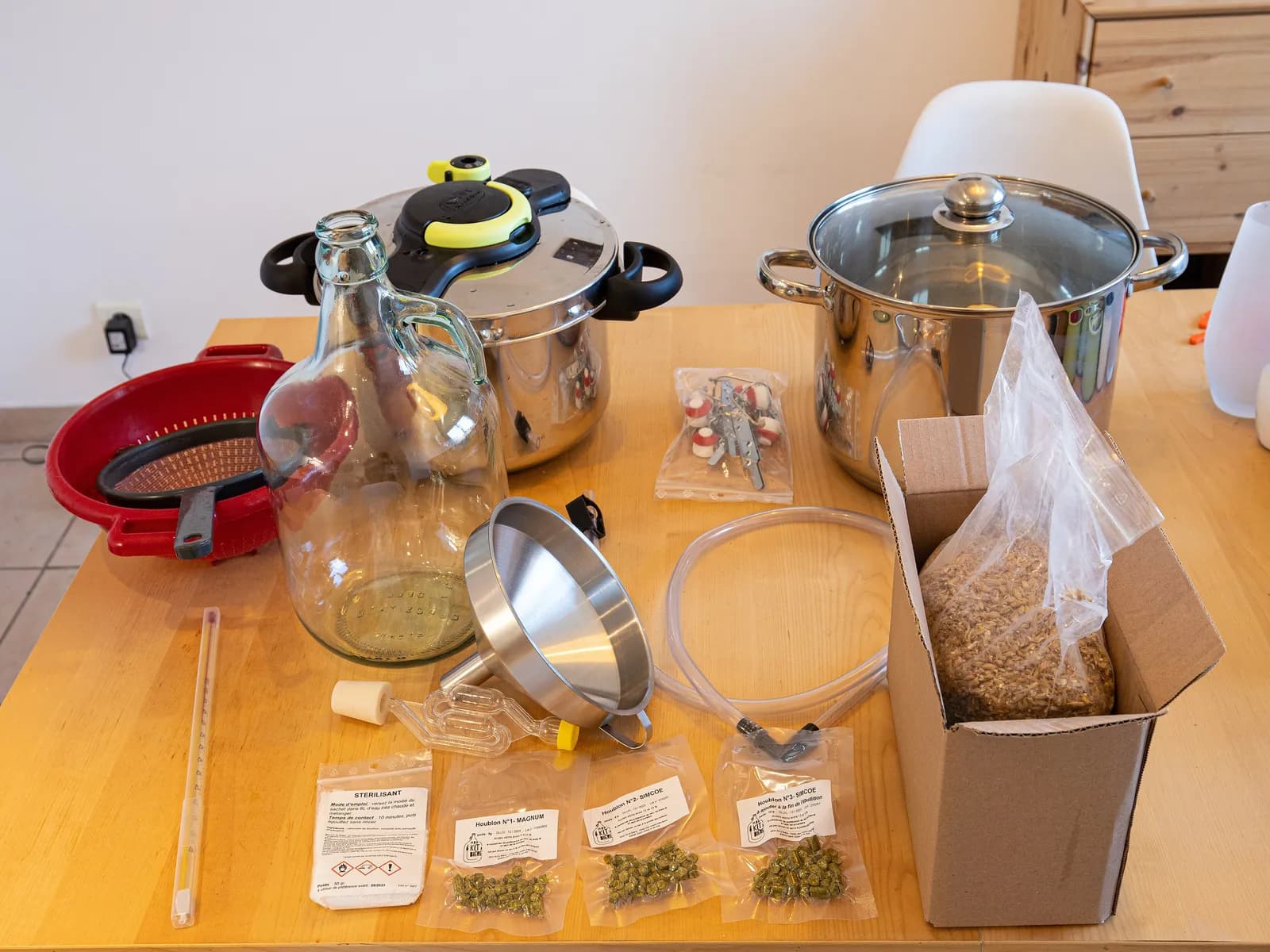
The best gifts for homebrewers fix a step they find slow or fiddly, or make it more fun to share the beer once it's done. That usually means looking at three stages: brew day, bottling day and the day they hand bottles to friends. This guide sorts gift ideas by stage, then covers a question many brewers search for at bottling time: how to cap beer bottles, and what to do when there's no capper in the house. Two of the ideas come from our shop, the Beer Mortar and the CapBlast, because most homebrew ends up in crown-capped glass bottles that need opening; the rest you'll find in any homebrew store.
Key Takeaways
- Ask (or check) how they brew and how they package before buying: extract or all-grain, bottles or kegs.
- Bottling gear is the safest bet: a bench capper, oxygen-absorbing caps, a bottling wand, a drying rack.
- Without a capper, don't improvise: use swing-top bottles, PET bottles or a borrowed capper.
- Don't recap twist-off bottles, and wear safety glasses around bottles that might be over-carbonated.
- In the US, homebrewing is for adults, for personal or family use, and homebrew can't be sold.
Before you buy: two questions to answer
Homebrewers don't all use the same gear, so a gift that suits one can sit unused at another's house. Two answers narrow the list.
How do they brew? Beginners often start with kits based on malt extract, which skip the mashing step; advanced brewers mash grain themselves in "all-grain" brewing, which takes longer and needs more equipment (Wikipedia). An extract brewer may welcome a bigger pot; an all-grain brewer probably has one and would rather have a better thermometer or a wort chiller.
How do they package? After fermentation, beer is carbonated either in a keg with compressed CO₂ or in bottles with priming sugar (Wikipedia). Bottlers need caps, cappers and bottles; keggers don't. If you see cases of empty bottles in the garage, you have your answer.
If you can't ask without spoiling the surprise, a gift card to their local homebrew shop lets them choose.
Gifts for brew day
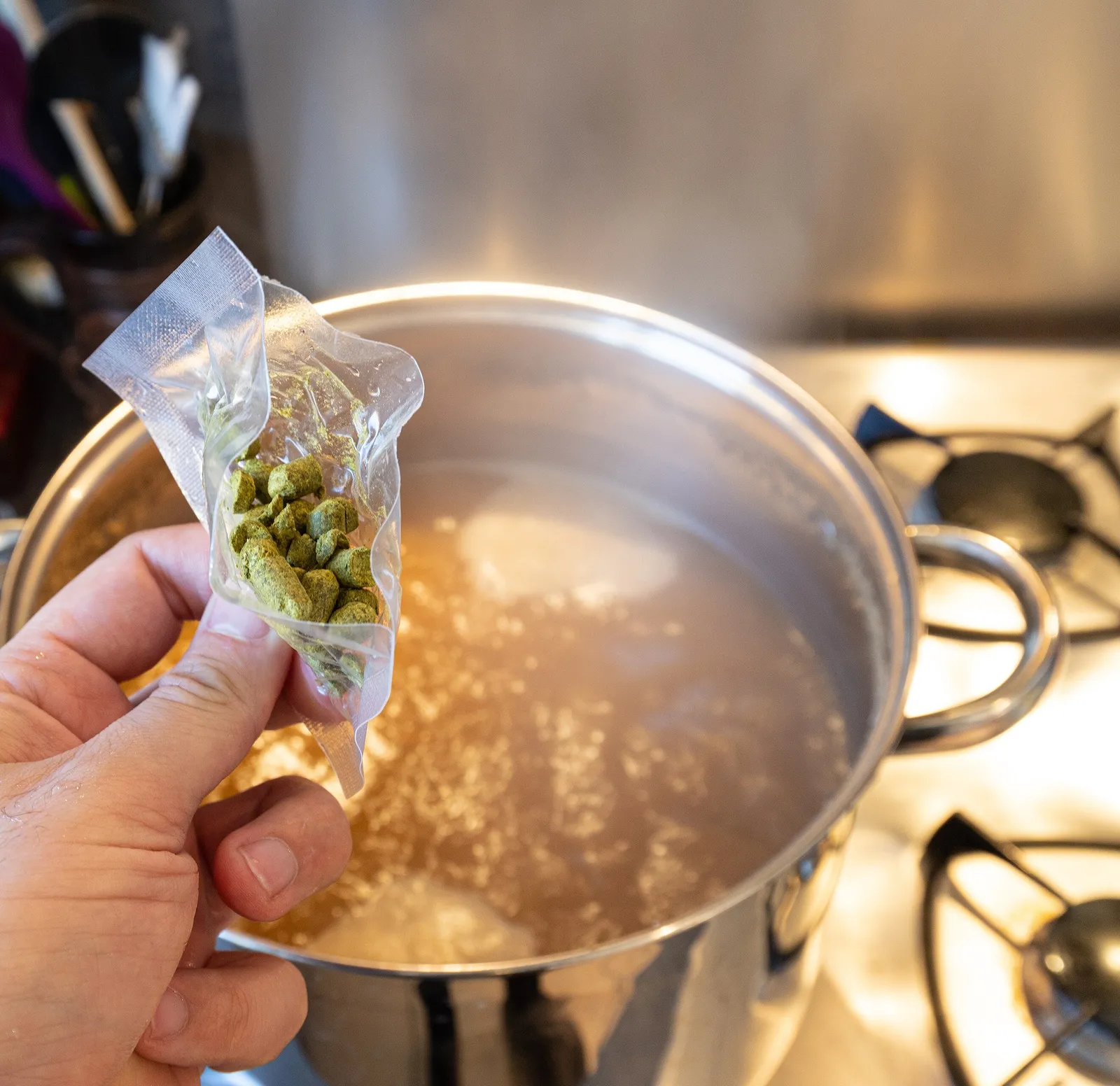
Photo: PierreSelim / Wikimedia Commons (CC BY 3.0), cropped
1. A good thermometer
Temperature matters at every step, from mashing to fermentation. Ales usually ferment around 64 to 75 °F and lagers much colder, around 50 °F (Wikipedia). A fast-reading digital probe thermometer, or a stick-on strip thermometer for the fermenter, is a small gift that gets used on every batch.
2. A wort chiller
After the boil, the wort has to cool down quickly before the yeast goes in. Many homebrewers use an immersion chiller, a coil of copper or stainless steel tubing that runs cold tap water through the hot wort (Wikipedia). For someone still cooling the pot in an ice bath in the sink, it replaces that step. Check the length against their pot before buying.
3. A hydrometer or a spare one
A hydrometer measures the sugar in the wort before and after fermentation, which tells the brewer how far fermentation has gone and roughly how strong the beer is. It's glass and breaks easily, so a spare one, or a sturdy test jar to go with it, is rarely wasted.
4. An ingredient kit for a style they haven't tried
A recipe kit (malt, hops and yeast for one batch) lets them try a new style without designing the recipe. Pick one matched to their method: extract or all-grain.
Gifts for bottling day
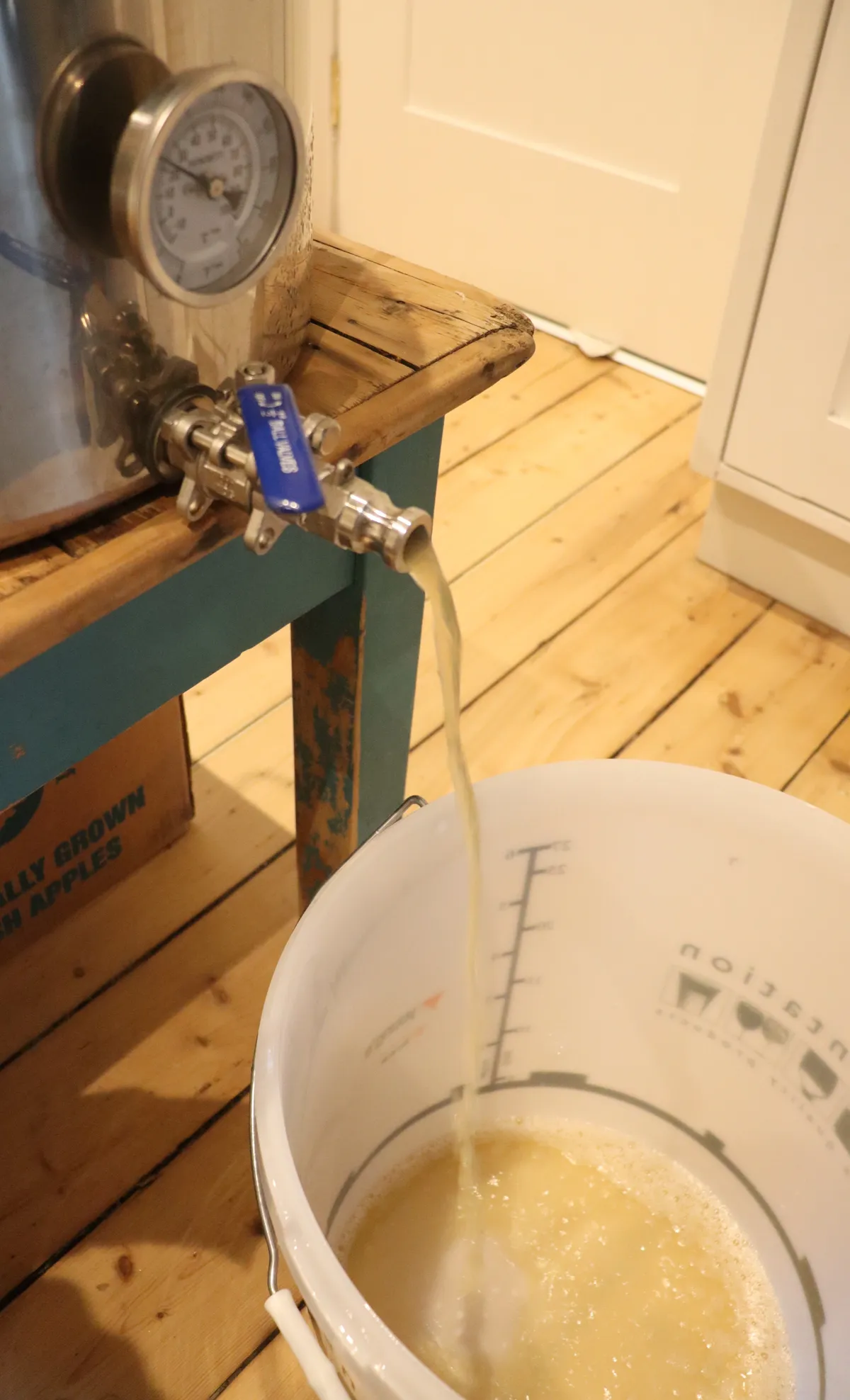
Photo: Mike Shaw / Wikimedia Commons (CC BY-SA 4.0), cropped
Bottling is the step many homebrewers like least: sanitize every bottle, fill, cap, wait. Anything that makes it faster or more reliable is a good gift.
5. A bench capper
There are two common types of capper. A wing capper is handheld: you place it over the cap and push two levers down, which crimps the cap around the neck. A bench capper stands on the table, holds the bottle in place and presses the cap with a single lever. If the brewer you're buying for still uses a wing capper, a bench capper is an upgrade.
6. Crown caps, including oxygen-absorbing ones
Caps run out at the worst moment. A bag of standard crown caps is a cheap stocking stuffer, and oxygen-absorbing caps have a liner designed to take up some of the oxygen left in the neck of the bottle. The crown cap itself dates from 1892 and still seals the same way: a liner pressed against the lip of the bottle, held by a crimped metal skirt (Wikipedia). Our article on the history of beer bottle caps tells the story.
7. A bottling wand and a drying rack
A bottling wand is a rigid tube with a spring valve at the tip that fills each bottle from the bottom and stops when lifted. A bottle drying tree holds sanitized bottles upside down until they're filled.
8. Swing-top bottles
Flip-top bottles with rubber stoppers close by hand and can be reused many times (Wikipedia). They're also the simplest answer to bottling without a capper (see below). Check that they're made for carbonated drinks, and that the seals are in good condition.
9. Labels or cap stickers
Blank labels or round cap stickers let them mark the style and bottling date on each batch, which helps when two batches share a shelf. Our guide on how to store beer explains why bottles should stay upright, cool and out of the light while they condition.
Gifts for sharing the beer
Most homebrew ends up in crown-capped glass bottles, handed to friends at dinner or opened at a barbecue.
10. The Beer Mortar
The Beer Mortar sits on a crown cap, takes one palm strike and sends the cap flying straight up as the bottle opens. It works on standard pry-off crown caps, so it suits most homebrew bottles; it doesn't work on swing-tops or screw caps. Aim it straight up into open space, never toward people, pets or faces, and keep it out of children's reach. Our guide to what a beer mortar is and how to use it shows the motion.
11. The CapBlast
The CapBlast is a slim stainless steel lever opener made for one-hand use and small enough for a keyring. It's the opener for the brewer who brings a few bottles to a friend's house and never finds an opener there.
12. Glasses, a book or a competition entry
A set of glasses suited to the styles they brew shows off the color and aroma of the beer; our beer glass types guide matches shapes to styles. A brewing book is another classic: The Complete Joy of Home Brewing, first published in 1984 by Charlie Papazian, founder of the American Homebrewers Association, is still in print (Wikipedia). For a confident brewer, paying the entry fee for a homebrew competition, many of which are judged under the Beer Judge Certification Program guidelines, gets them written feedback from trained judges.
Which gift for which homebrewer?
| Homebrewer | Gift idea | Stage |
|---|---|---|
| Brand new, extract kits | Thermometer, ingredient kit, labels | Brew day |
| Cools the pot in the sink | Immersion wort chiller | Brew day |
| Bottles every batch | Bench capper, caps, bottling wand, drying rack | Bottling day |
| Has no capper | Swing-top bottles | Bottling day |
| Brings beer to every party | Beer Mortar or CapBlast | Sharing |
| Already has all the gear | Glasses, a book, a competition entry | Sharing |
How to cap beer bottles with a capper
Capping is quick once the bottles are filled and the caps are sanitized:
- Use pry-off bottles. Bottles that need an opener have a rounded lip (the "crown finish") that a standard cap locks under.
- Sanitize the caps. Soak them in the same no-rinse sanitizer as the bottles.
- Set the cap. Place a cap squarely on the bottle mouth.
- Crimp. With a wing capper, center the bell over the cap and push both levers down evenly. With a bench capper, set the bottle on the base and pull the lever down in one smooth motion.
- Check. The skirt should be crimped evenly all the way around and the cap shouldn't turn or lift when you press on it. If it does, cap it again with a new cap.
How to cap beer bottles without a capper
The short answer: don't improvise the crimp. A crown cap only seals when its skirt is pressed evenly around the lip, and improper capping methods are one of the causes of exploding bottles in homebrewing, along with too much priming sugar and inappropriate bottles (Wikipedia). Tapping a cap on with a hammer and a socket, or squeezing it with pliers, tends to leave gaps (so the beer goes flat) or crack the neck.
What works instead:
- Swing-top bottles. They close by hand with a wire clasp and a rubber seal.
- PET bottles with screw caps. Plastic soda bottles can be used for homebrew if they're properly sanitized, since they're made to hold carbonation (Wikipedia). Squeezing one also shows when carbonation has built up.
- A borrowed capper. Homebrew clubs and shops often lend or rent equipment. A capper is also a good gift idea for next time (see idea 5).
- A keg. For brewers who are tired of bottling altogether, kegging skips caps entirely, though it's a bigger investment.
Don't recap twist-off bottles. Twist-off crown caps are pressed around screw threads rather than locked under a flange (Wikipedia), so a regular cap may not seal. Keep pry-off bottles for bottling.
Measure the priming sugar. A common rate is about 4 ounces of corn sugar for a 5-gallon batch, boiled in water and cooled before bottling (Wikipedia), but follow the recipe. Too much sugar over-carbonates the beer. If you suspect a batch is over-carbonated, wear safety glasses, handle the bottles with gloves and chill them before opening.
What to keep in mind before you give it
- Homebrewing is for adults. US federal rules let an adult produce beer at home for personal or family use and not for sale, up to 100 gallons per calendar year in a household with one adult and 200 gallons with two or more (27 CFR 25.205). The rule sets the adult age at 18 unless the locality requires a higher minimum age for buying beer, which in practice means 21 across the US (23 U.S.C. 158). In the UK, you must be 18 to buy alcohol (GOV.UK).
- State laws vary. Homebrewing has been legal in every US state since 2013, when Alabama and Mississippi became the last two to allow it, but states differ on whether homebrew can leave the house, for example for a competition or a club meeting (American Homebrewers Association).
- Share, don't stockpile. A batch of homebrew is meant to be shared and spread out over weeks, never drunk in one evening. NIAAA's Rethinking Drinking and the UK charity Drinkaware have practical guidance for keeping it moderate.
- Hand-deliver beer. Give homebrew in person. Our openers ship free, so the gift you send by mail can be the opener.
The bottom line
The most useful gifts for homebrewers depend on the stage: a thermometer, a wort chiller or an ingredient kit for brew day; a bench capper, caps, a bottling wand or swing-top bottles for bottling day; glasses, a book or an opener for the day they share the beer. If they're stuck without a capper, swing-tops or PET bottles are safer than any improvised crimp, and twist-off bottles shouldn't be recapped. For the sharing side, the Beer Mortar turns opening a homebrew bottle into a small show, and the CapBlast lives on the keyring; both ship free. Browse more gifts for beer lovers if they also like other people's beer.