
· 6 min read
Best Bottle Opener Keychain: What to Look For Before You Buy
How to pick the best bottle opener keychain: weight, edges, leverage, ring strength and pocket wear, plus the main formats and which one suits whom.
- bottle opener keychain
- bottle opener
- buying guide
- everyday carry
- gift guide
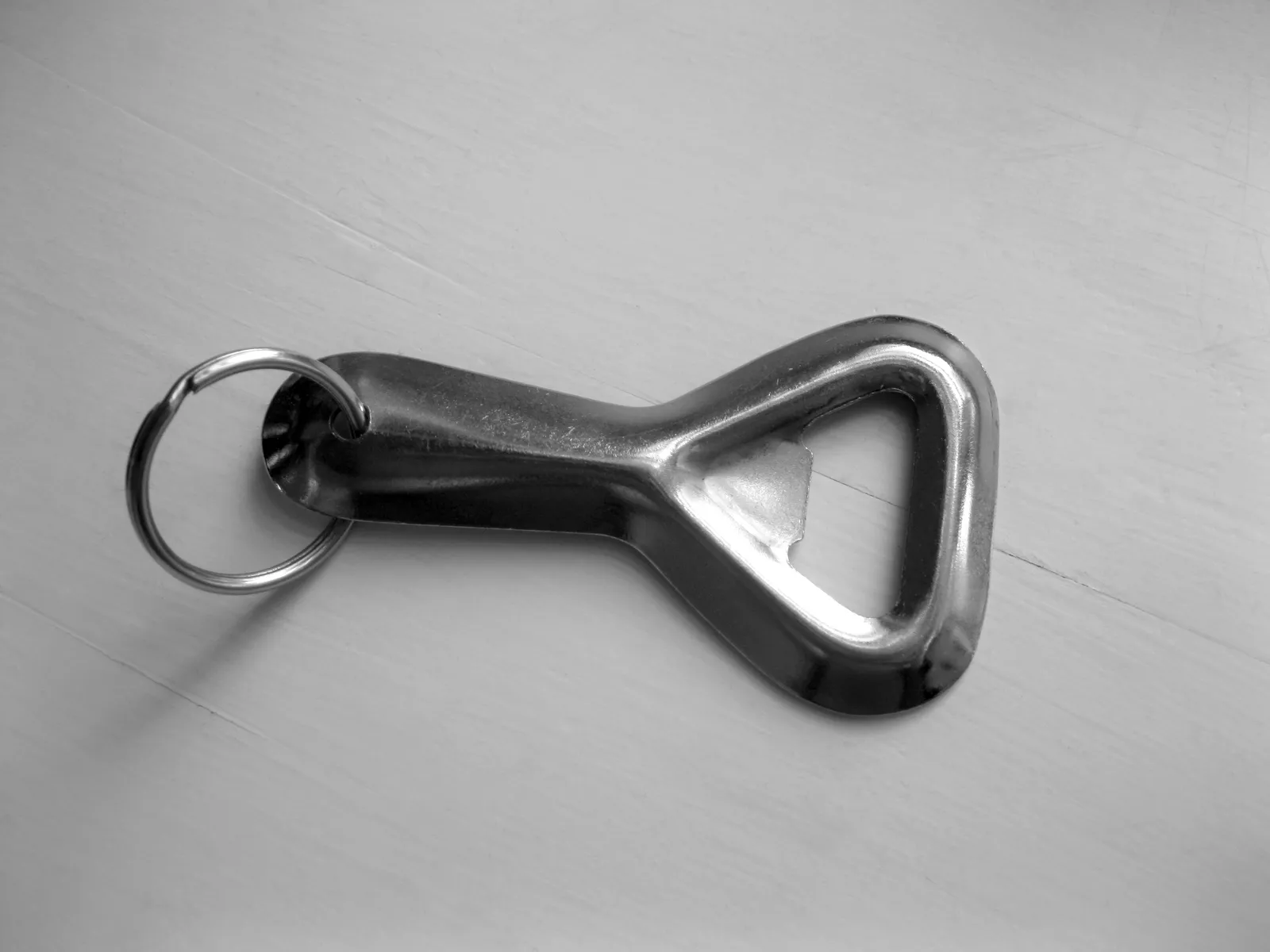
The best bottle opener keychain is the one you stop noticing on your keys until the moment you need it: light, smooth-edged, made of a metal that won't rust or bend, and long enough to lift a cap without a fight. A bottle opener is a specialized lever that slips under the crimped edge of a metal cap and uses a point on the cap as its pivot (Wikipedia: Bottle opener). This guide covers what to check before you buy, the main formats, and where a slim lever opener such as the CapBlast fits in.
Key Takeaways
- Check five things on any bottle opener keychain: weight, edges, leverage, ring strength and the metal.
- A longer handle, measured from the pivot, means less effort to lift the cap.
- Stainless steel resists rust and keeps a firm lip; aluminum is lighter but can bend at the lip over time.
- Check the split ring or attachment point as closely as the opener: a weak ring loses the whole thing.
- Any keychain opener works on standard metal crown caps, including sodas and alcohol-free beers.
How a keychain bottle opener works
Every bottle opener keychain uses the same physics: it is a Class II lever, the same family as a nutcracker or a wheelbarrow, with the load between the pivot and your hand (Wikipedia: Lever). The lip catches under the cap's edge, the far rim of the cap acts as the pivot, and you push the handle up.
The metal crown cap you are lifting was invented by William Painter in Baltimore in 1892 (Wikipedia: Crown cork). Bottle openers followed: the first US patent for one, a table-mounted model, was granted in 1893 to Alfred L. Bernardin, and Painter received his patent for a hand-held opener in 1894 (Wikipedia: Bottle opener). For the longer story, see our piece on why bottle caps still exist.
What to look for in a bottle opener keychain
Five checks separate a keychain opener you'll use for years from one that ends up in a drawer.
Weight: light enough to forget
Your keys go everywhere, so every gram counts. A heavy opener pulls on the ignition or the lock, swings against your leg and makes the whole bunch bulky. A slim, flat opener sits in the same pocket as your keys without adding much.
Edges: smooth enough for your pocket
Pick up the opener and run a thumb around it. Sharp corners and rough stamping wear holes in jeans and scratch phones. Rounded corners, a polished or tumbled finish and no burrs around the cut-out are the signs of an opener made to be carried.
Leverage: long enough to open with one push
A lever's mechanical advantage depends on how far your hand is from the pivot compared with the distance between the pivot and the load (Wikipedia: Lever). In plain terms, a longer handle means an easier push. Tiny novelty openers often look clever but need two or three tries. Look for a handle you can grip with at least two fingers.
The ring: the part people forget to check
A keyring, or split ring, is a single piece of metal in a double loop that you pry open to slide a key on (Wikipedia: Keychain). A thin ring slowly spreads open, and one day the opener is gone. Look for a thick, tightly wound ring, or a closed hole in the opener that a good ring can pass through.
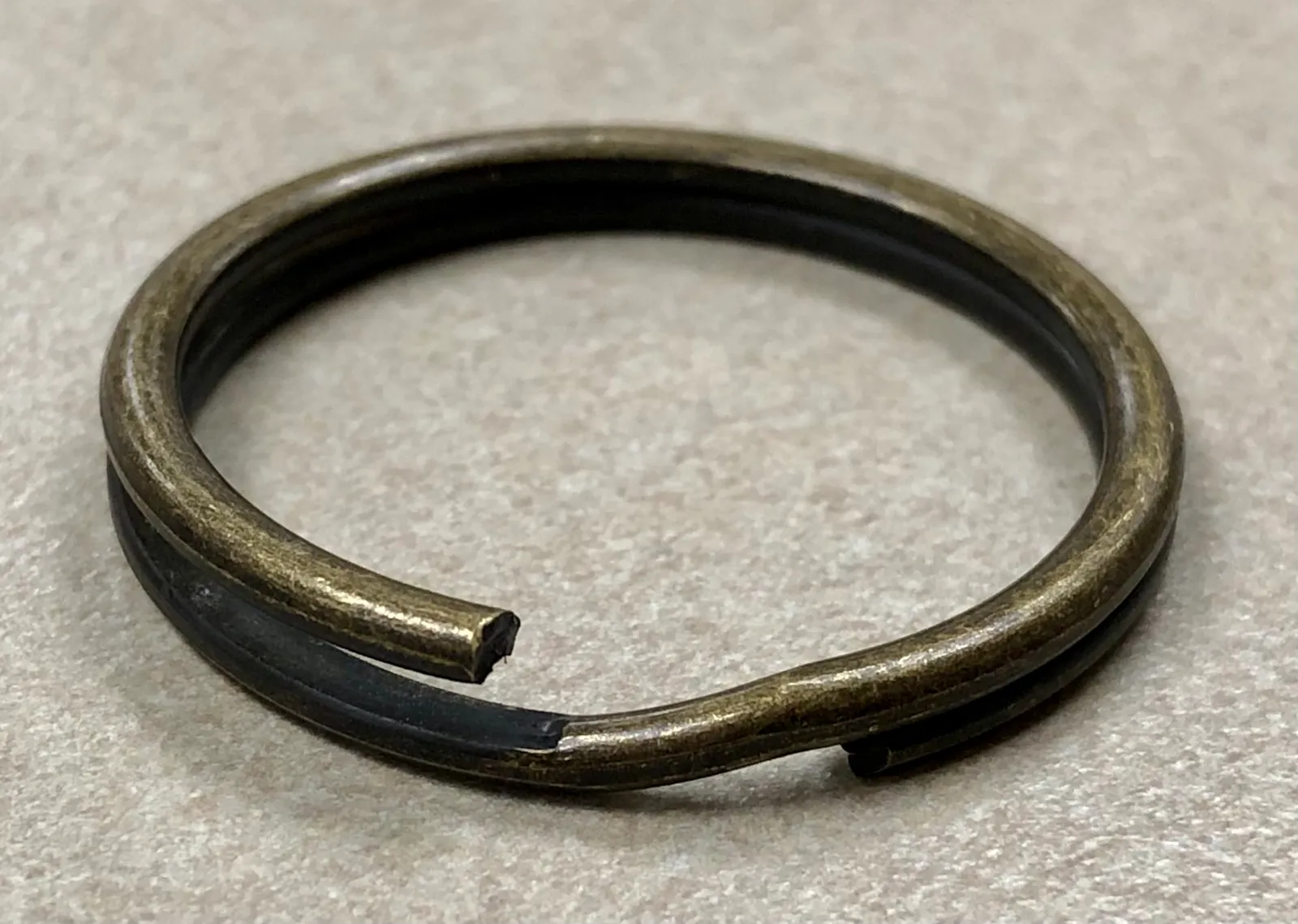
Photo: Mbrickn / Wikimedia Commons (CC0)
The metal: stainless steel or aluminum
The lip does all the work, so it needs a metal that holds its shape. Stainless steel resists rust and corrosion because it contains at least 10.5% chromium, which forms a protective film on the surface (Wikipedia: Stainless steel). That matters for something that lives in damp pockets, coolers and boat bags. Aluminum openers are lighter, which suits big key bunches, but a thin aluminum lip bends more easily than steel. Whatever the body is made of, the lip should be solid metal.
Bottle opener keychain formats compared
Most keychain openers fall into four formats. None is "the best" for everyone; it depends on how you carry your keys.
| Format | Strong point | Watch out for | Suits |
|---|---|---|---|
| Flat lever opener | Slim, good leverage, few parts | Check the edges and the ring hole | Everyday carry, gifts |
| Multi-tool keychain | Opener plus screwdriver, cutter, etc. | Bulkier and heavier on your keys | Campers, DIY fans |
| Shaped novelty opener | A joke or a design on your keys | Often short, so less leverage | Gifts, collectors |
| Carabiner with opener | Clips onto belt loops and bags | The gate can open under load | Festivals, hiking |
A flat lever opener is the safe default. The CapBlast lever opener is one: compact, built for one-handed use, with a stainless build that shrugs off drops and damp, and slim enough to stay on a keyring.
Keychain opener or home bar opener?
A bottle opener keychain covers the barbecue, the cooler and the picnic. At home, a dedicated bar opener can do something a keychain can't: put on a small show. The Beer Mortar rests on a metal crown cap and, with one palm strike, opens the bottle and sends the cap upward. Our guide to what a beer mortar is and how to use it covers it step by step, and the novelty bottle openers page compares both formats.
Plenty of people keep one of each: a lever opener on the keys and a show piece on the bar. If you are setting up that bar, our home bar on a budget guide covers the basics. With any cap launcher, aim upward into open space, never at people, faces, pets or anything breakable, and keep it away from children.
A keychain bottle opener for people who don't drink
A bottle opener is a tool, not an invitation to drink more. It opens craft sodas, root beer in glass bottles and alcohol-free beers with standard metal caps just as well as beer. That makes a bottle opener keychain a safe small gift for nearly anyone, and a handy one for the designated driver at a party. If you are stuck without one, we also have a guide on how to open a beer without a bottle opener.
Beer is for adults of legal drinking age: 21 in the US under the National Minimum Drinking Age Act, and 18 to buy alcohol in the UK (GOV.UK). NIAAA's Rethinking Drinking site has practical tips for pacing a relaxed evening.
The bottom line
The best bottle opener keychain is light, smooth-edged, long enough to give you leverage, made of a metal that holds its lip, and attached by a ring that won't spread open. For most people, a flat lever opener in stainless steel is the simple choice, and the CapBlast is one: one-handed, keyring-sized and stainless. If you want a second opener for the bar that turns opening a bottle into a trick, look at the Beer Mortar. For more gift ideas around both, see our gifts for beer lovers page.